
Shusha Guppy: Persian Singer, Writer, and Cultural Connector
Shusha Guppy (née Shamsi Assar; 1935–2008) was born into a prominent Iranian family in Tehran. Her father, Sayyed Mohammad-Kāzem Assar, was a noted Shia theologian and university philosophy professor, who combined Persian literary and Sufi influences with an appreciation for the West . Guppy grew up surrounded by Persian poetry and mystical Sufi chants . This rich cultural milieu instilled in her a deep love for Iran’s traditional music and literature.
December 20, 2025
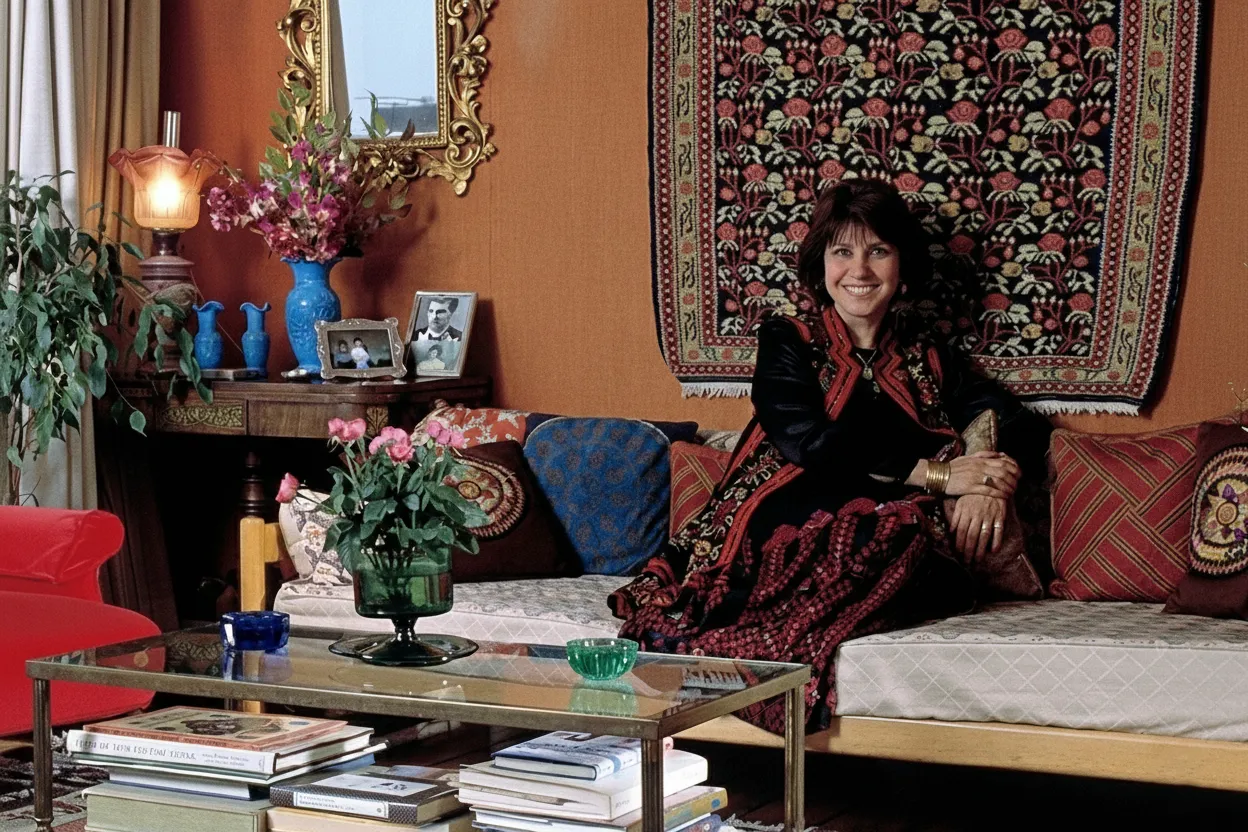
Shusha Guppy in her house at London - 1991
Education in Paris: Blending Persian Roots with French Culture
In her mid-teens Guppy earned a scholarship to study in Paris . At around age 16–17 she attended the Sorbonne (studying French literature, Oriental languages and philosophy) and simultaneously trained as a singer . In postwar Paris she mixed with writers and artists (Louis Aragon, Jean-Paul Sartre, Albert Camus, etc.) and absorbed the vibrant left-wing chanson culture . A chance meeting with the poet Jacques Prévert led her to record an album of Persian folk songs. With Prévert’s encouragement, Guppy began her recording career with Persian Love Songs and Mystic Chants (1957, as Chucha Assar) . This debut – and her later French-language albums – fused native Persian melodies with classic chansons and medieval French poetry . Her first album is now regarded as a classic introduction of Persian folk into a Western idiom .

Singer Shusha Guppy on stage, circa 1975-1980
Move to London and Western Folk Influences
After marrying British explorer Nicholas Guppy in 1961, Shusha Guppy settled in London . There she became fluent in English and began singing professionally, drawing on the 1960s folk revival. Influenced by Joan Baez, Bob Dylan, Leonard Cohen and the bluegrass tradition, she started writing her own songs in English and covering contemporary singer-songwriters . She performed widely – on BBC television and radio and in concerts across Britain, Europe and the United States . For example, she toured the Netherlands and Belgium in 1975, and later even sang at the Westminster Abbey memorial for her friend, the poet Ted Hughes . In these Western venues her clear, modal melodies (steeped in Persian tradition) and emotive voice stood out to audiences of English folk and literary circles .
Key Albums
Guppy’s discography (over a dozen albums) spans Persian folk to Western song: notably Persian Love Songs & Mystic Chants (1971) and Song of Long-Time Lovers (1972) ; a soundtrack album for the Bakhtiari documentary (see below); French chanson collections like La Fortune and Durable Fire ; and later works including Refugee (1995) . Her music “channeled the traditions of her native Iran” into innovative folk records .
People of the Wind (1976–77)
Guppy co-produced and narrated the acclaimed documentary People of the Wind (on the Bakhtiari nomadic migration in Iran). The film earned an Oscar nomination for Best Documentary and a Golden Globe . Guppy composed the soundtrack, bringing Persian themes to an international audience . (She later protested that she was insufficiently credited for her role in the film .)
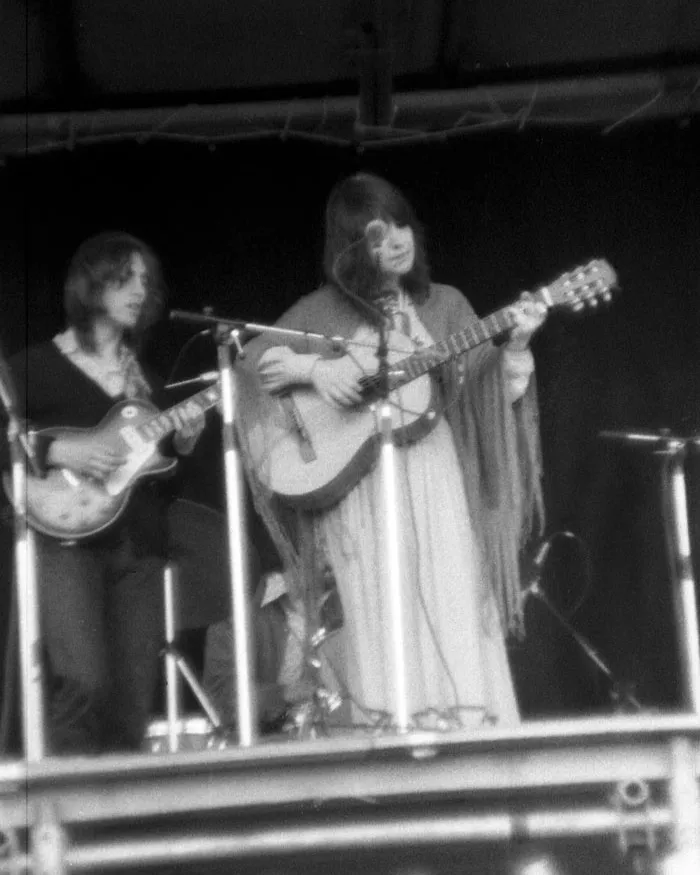
Shusha Guppy, Hyde park, London
Influence of Iranian Traditions
Throughout her career, Iranian musical and poetic heritage was central to Guppy’s art. She often sang in Persian, using traditional modal scales and Sufi-inspired melodies. Her vocal style and song choices vividly fused Persian and Western elements: for instance, Persian Love Songs features mystic chants and poetry, while her English songs often incorporate lyrical images from Persian culture . As AllMusic notes, Guppy “channeled the musical traditions of her native Iran” to create uniquely “beguiling” folk records . In interviews she remarked that the Persian language itself – with its idioms of warmth and hospitality – shaped her worldview and songwriting .
The verb 'to love' in Persian is 'to have a friend.' 'I love you' translated literally is 'I have you as a friend,' and 'I don't like you' simply means 'I don't have you as a friend. / Shusha Guppy
Guppy’s work helped introduce Persian culture to Western audiences. Her memoir The Blindfold Horse (1988) nostalgically portrayed pre-revolutionary Tehran as a humane Islamic society “unsullied by dogmatism” . By depicting this lost world of Persian art and wisdom, she challenged stereotypes of Iran. She also edited translations of Iranian folklore (The Secret of Laughter, 2005) and contributed travel books about the Middle East. In media and lectures she drew connections between Eastern and Western heritage – for example, a 2006 BBC radio feature (“School of Illumination”) had Guppy explaining how medieval Persian scholars preserved Greek philosophy .

Shusha Guppy in her house at London - 1991
Literary and Editorial Career
In London Guppy became an acclaimed author and editor. Her first book, The Blindfold Horse: Memories of a Persian Childhood (1988), won the Yorkshire Post non-fiction prize and the Winifred Holtby Memorial Prize . It evokes “civilized life in patrician Tehran” before the Shah’s fall . Her second memoir, A Girl in Paris (1991), recalls her student years in postwar France . She also co-edited anthologies and translated Persian proverbs, as well as writing travel essays (Three Journeys in the Levant, 2001). Late in life she collected Iranian fairy tales in The Secret of Laughter (2005) .
From the mid-1980s until 2005 Guppy was the London editor of The Paris Review , the prestigious American literary journal. She regularly contributed essays, book reviews and obituaries to British and U.S. publications (including The Independent), often speaking on Iranian art and culture . In these roles she was a cosmopolitan salonnière in London, introducing Persian writers and ideas to Western literary circles.
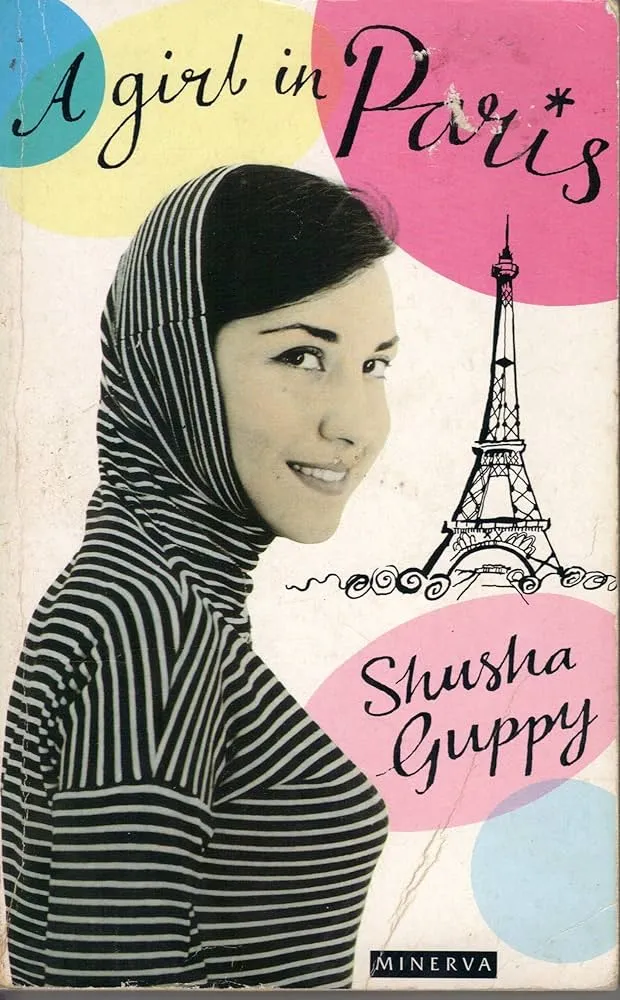
"A Girl In Paris" by Shusha Guppy
Legacy and Perception of Iranian Culture
Shusha Guppy is remembered as “one of the most talented women of her generation” . Through her music and writing she served as a cultural bridge: presenting the depth of Iran’s artistic heritage to Western audiences. Her memoirs and songs portrayed an Iranian civilization of poetry, philosophy and love of beauty, countering later images of fanaticism. As one friend noted, Guppy saw the “religion of love” in Islam and rejected stereotypes of its followers . Her recordings remain a unique hybrid of Persian and Western folk, and her books a sensitive chronicle of Iranian life.
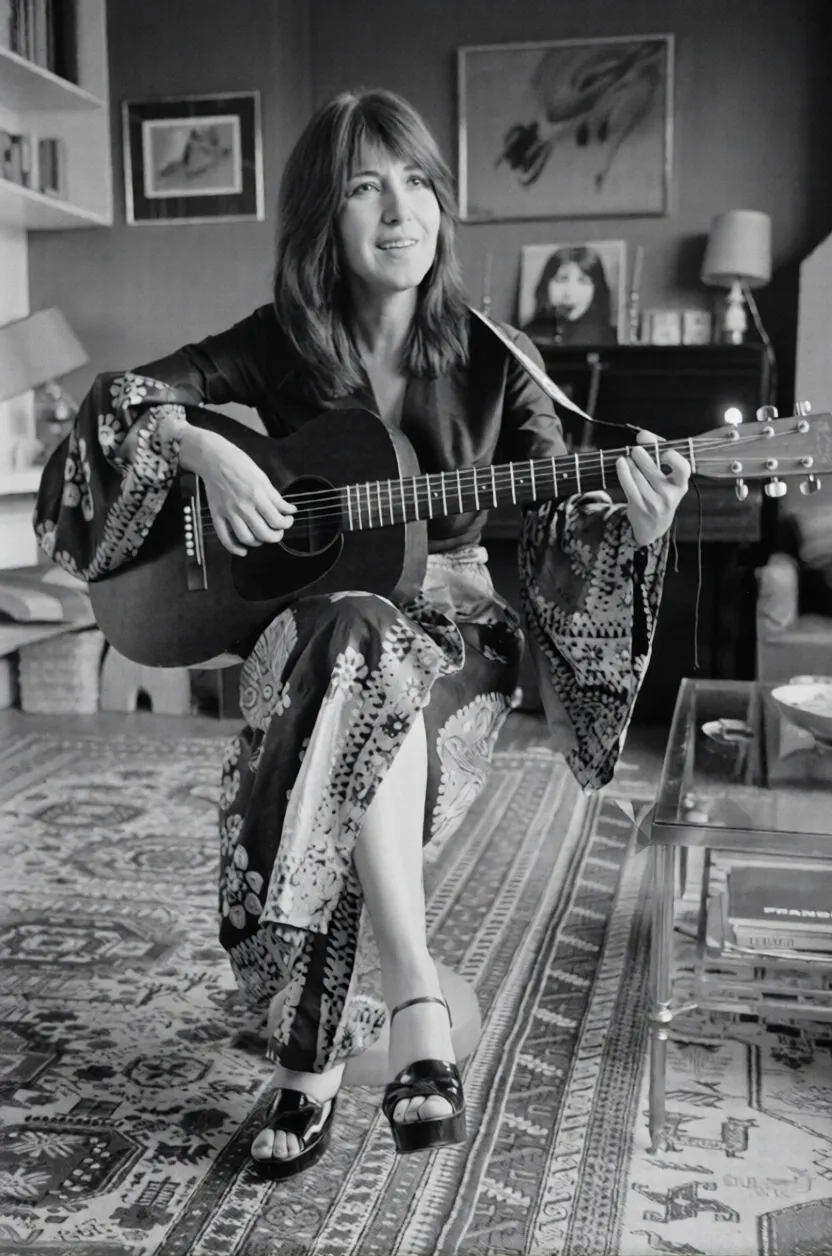
Shusha Guppy playing acoustic guitar
Sources
- Contemporary obituaries and profiles , her own writings and interviews , and music references document Guppy’s life. These describe her Iranian upbringing, European education, musical recordings and performances, literary works, and her efforts to promote Iranian culture abroad. .
- Shusha Guppy | Iran | The Guardian . 🔗
- ASHA Women: Shusha Guppy . 🔗
- Shusha Guppy | International Literature Festival Berlin . 🔗
- Shusha Guppy – Wikipedia . 🔗
- Shusha age, hometown, biography | Last.fm. .. 🔗
- Shusha Songs, Albums, Reviews, Bio & More | AllMusic . 🔗
- Shusha Guppy: Singer and writer acclaimed for a memoir of her Persian childhood | The Independent . 🔗
- Roundup — History News Network . 🔗