Echoes of the Nightingales: The Genesis of Persian Opera
The history of opera in Iran is a fascinating narrative of cultural blending that emerged from the indigenous dramatic traditions and evolved into a distinct Persian art form, primarily throughout the 20th century. This development was actively promoted by the Pahlavi regime as a symbol of modernity and a "civilizational exchange" (tabādol-e tamaddonī). It served to connect Iran's ancient past with the West and solidify Iran's progressive status on the global stage.
December 3, 2025
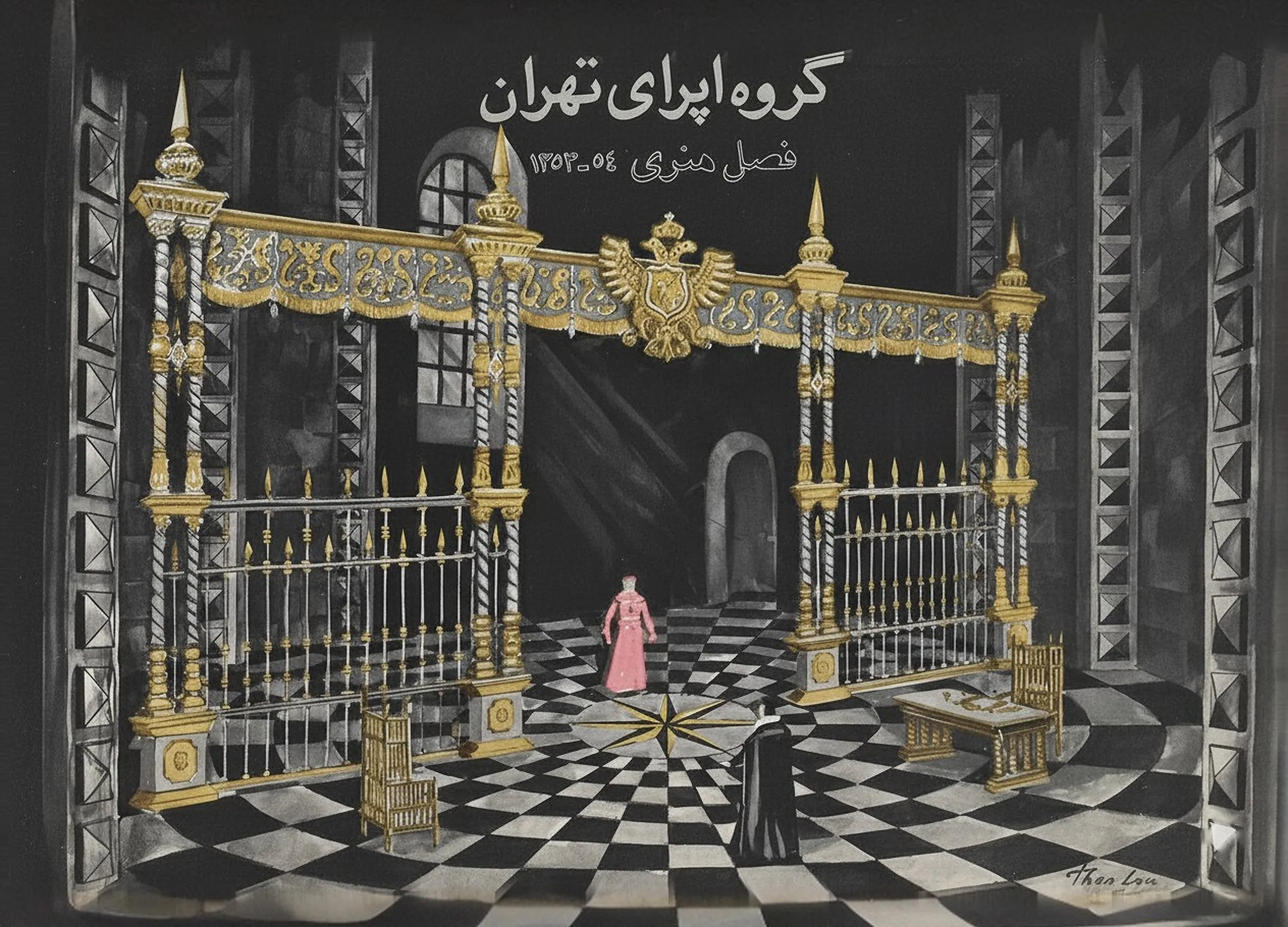
Tehran Opera Group
The Dawn of Persian Musical Drama
The concept of musical drama was not unfamiliar to Iran; the profound religious passion play of Ta'zieh (Ta'ziyeh), which incorporates poetry, music, singing, and movement, is regarded as a comprehensive indigenous form of Iranian theater. This form has often been likened to Persian opera and significantly influenced subsequent dramatic works.
Opera itself only entered Iran seriously in the mid-20th century, following the introduction of Western classical music in the late 19th century.
The early 20th century saw a shift toward modern, Western-influenced dramatic structures. A pioneering work in this transition from purely narrative to theatrical representation was Mirzadeh Eshghi's historical musical performance titled 'The Resurrection of the Iranian Princes' (Rastākhiz-e Shahriyārān-e Irān) in 1915.
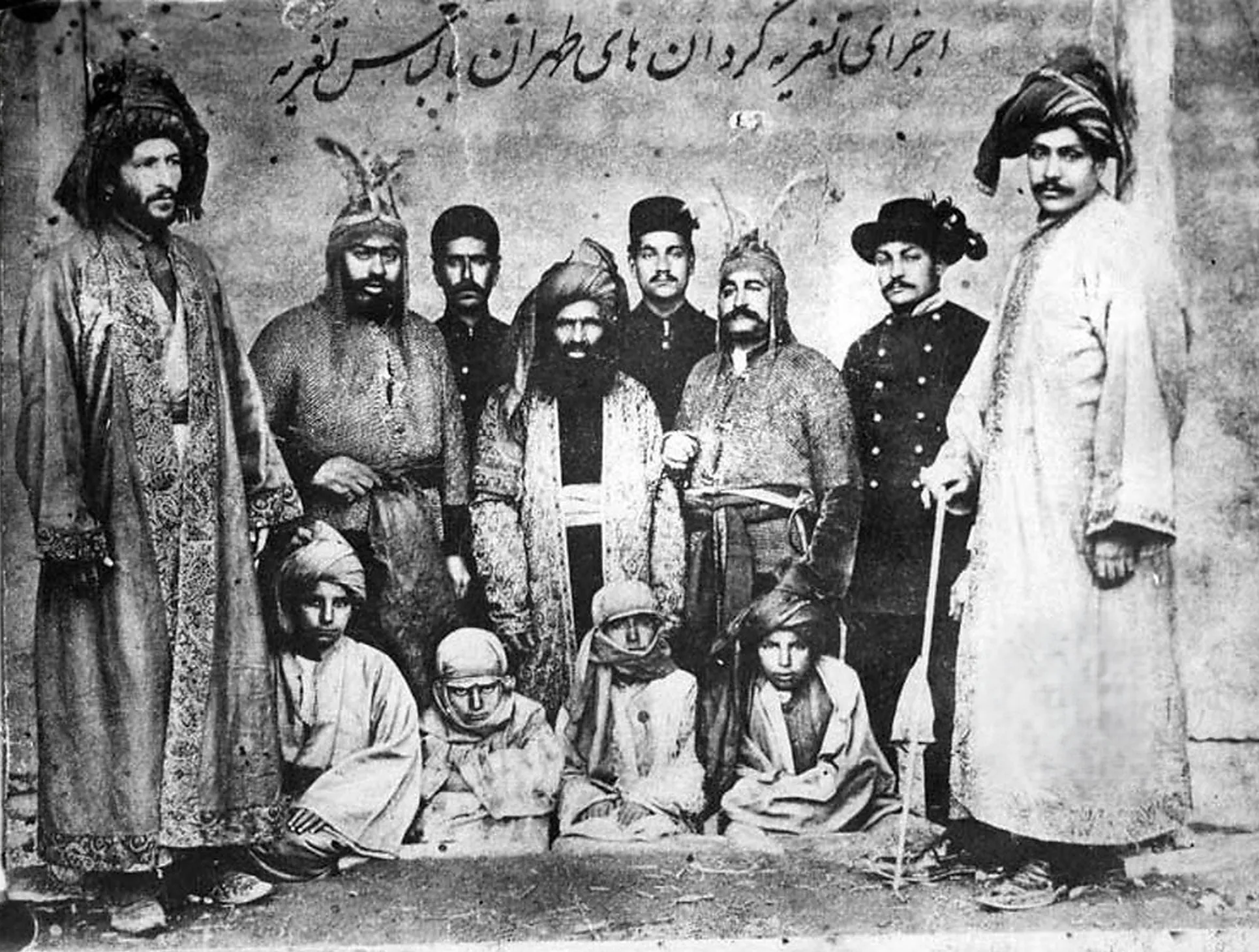
Tehran's Ta'ziyeh parade in Ta'ziyeh costumes
The Golden Age: The Pre-Revolution Era (1967–1979)
The institutional foundation of Iranian opera was the Roudaki Hall (later renamed Vahdat Hall) in Tehran, which, upon its opening in 1967, became the National Home of Opera and Ballet. Modeled after the Vienna State Opera, the building was designed by architect Eugen Aftandelians (also known as Yevguita Aftandeliantz) and took more than 10 years to construct.
Under the direction of Enayat Rezai (appointed in 1967) and later Nejad Ahmadzadeh, the hall served as the national opera house, hosting the Tehran Opera Orchestra, the Tehran Symphony Orchestra, and the Iranian National Ballet. Roudaki Hall presented a full annual season featuring 14 to 17 operas, including appearances by internationally renowned guest artists. Enayat Rezai also founded the "Tehran State Opera Company."
The hall hosted classic European operas such as Cosi fan tutte (including the roles of Guglielmo and Don Alfonso) and Rigoletto, which were often performed both in their original language and with Persian translation. International exchanges were frequent, with celebrated guest artists like Tito Gobbi, Renata Scotto, and Cesare Siepi performing there. Patronage of the arts came notably from Shahbanou Farah Pahlavi, who commissioned works like the children's opera Mana and Mani (1979) by Hossein Dehlavi, which was never staged due to the onset of the Islamic Revolution.
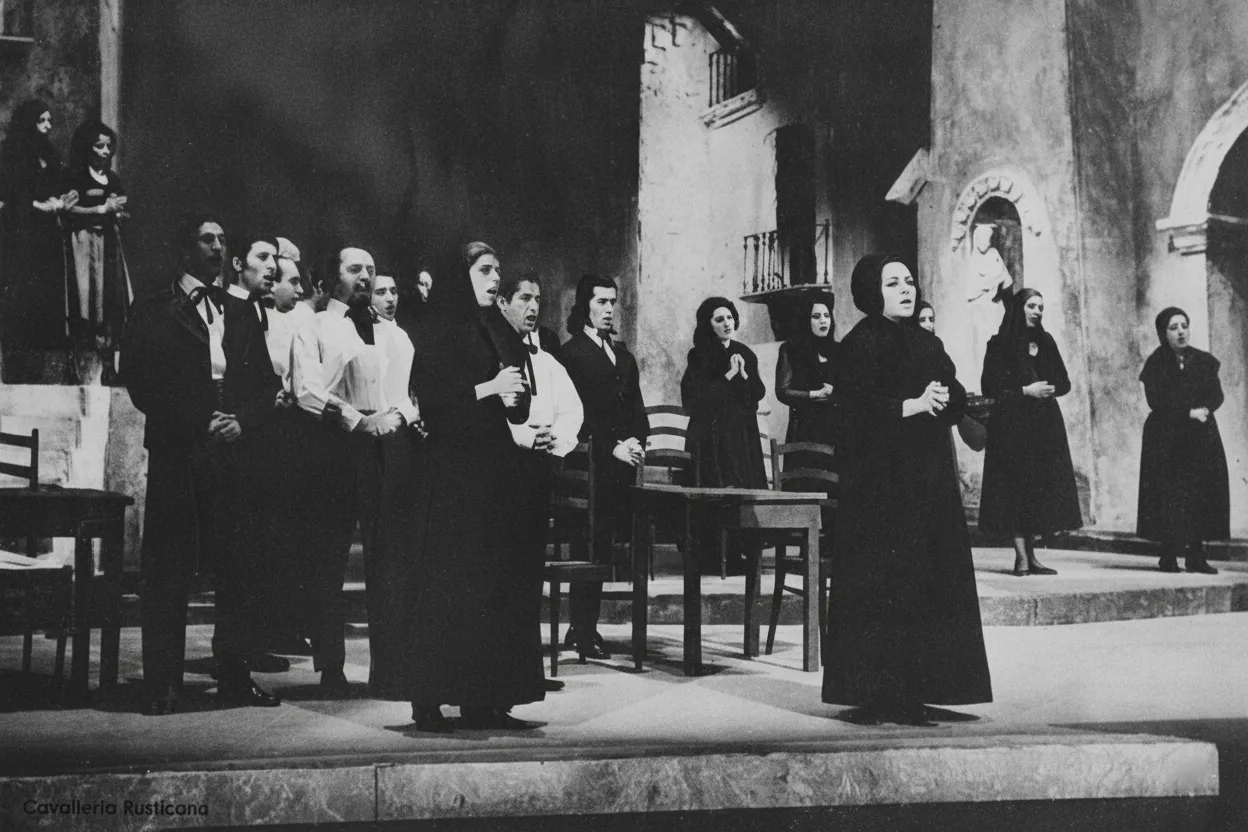
Tehran Opera Group performing the opera Cavalleria Rusticana at Rudaki Hall
Pioneers and National Repertoire
The establishment of the Western-style opera genre relied heavily on Iranian artists who underwent intensive foreign training before returning home. These composers specifically aimed to integrate the complex modal characteristics of traditional Iranian music, known as the Radif (Radif), within the harmonic framework of symphonic opera.
The inaugural ceremonies of the Roudaki Hall in 1967 featured two one-act Persian operas: Jashn-e Dehqān (or The Rural Festival) by Ahmad Pejman and Zāl and Rudābeh by Samin Baghcheban (with a libretto by Ahmad Shamlou). These works were performed by an entirely Iranian cast, including soprano Monir Vakili and baritone Hossein Sarshar.
Subsequent seasons showcased several Persian-language operas:
- Atossa (1968) by Thomas Christian David
- Qahremān-e Sahand (or The Hero of Sahand) (1968) by Ahmad Pejman
- Khosrow and Shirin (1970) by Hossein Dehlavi, based on the romance by Nezami Ganjavi
- Pardis and Parisa (1973-75) by Loris Tjeknavorian
- The monumental opera Rostam and Sohrab by Loris Tjeknavorian: Based on the Shahnameh, this work incorporated characteristics of Iranian music in an organized manner through "ethnomusical thinking."
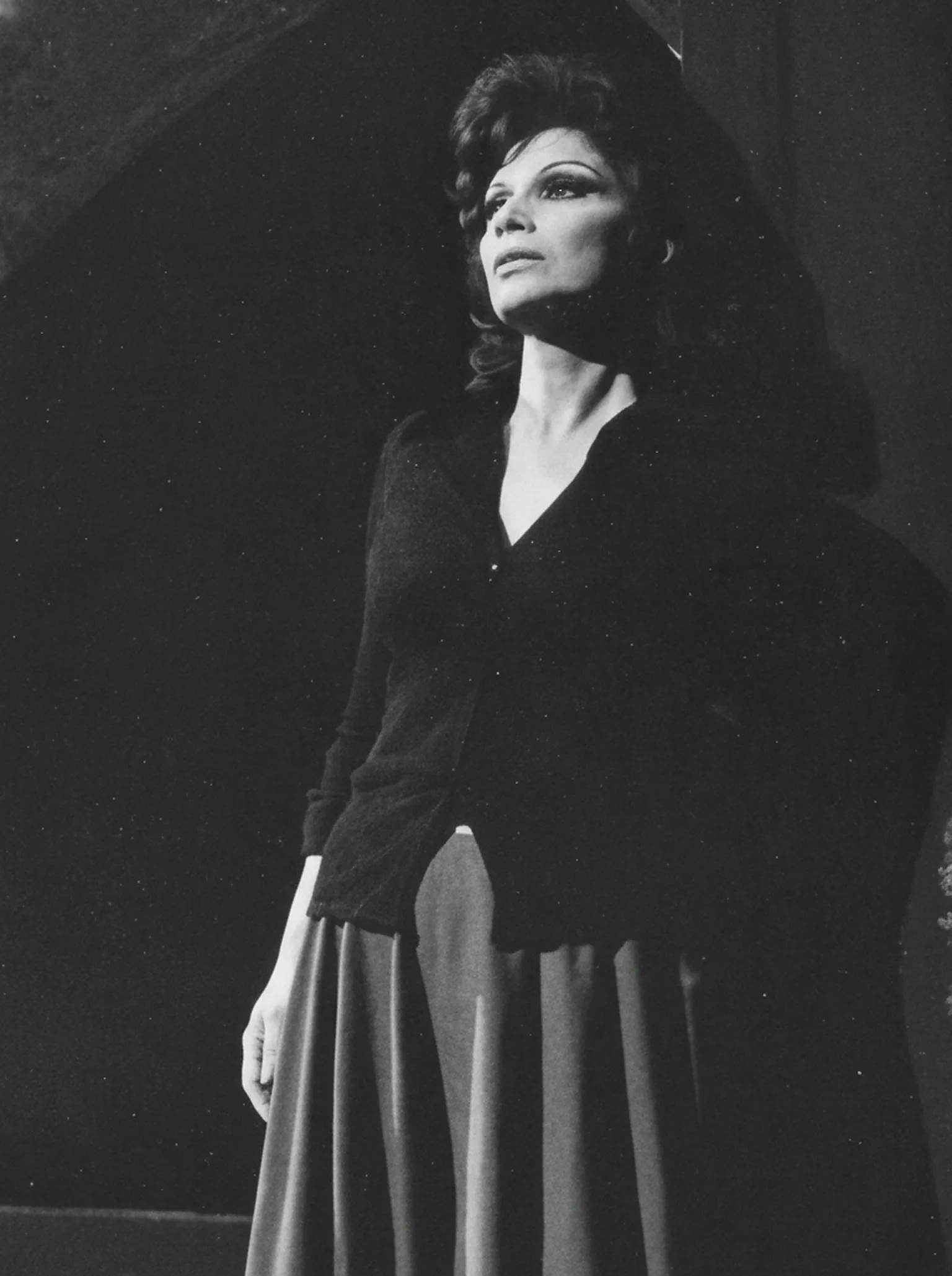
Monir Vakili
Key Soloists and Managers
Iranian soloists who returned from international training played leading roles in both Western and Persian operas:
- Monir Vakili (Soprano, born 1924), often called "The First Lady of Iranian Opera," studied in Paris and the United States before founding Iran's first opera company. She performed lead roles such as Madama Butterfly and Mimì (in La Bohème) at Roudaki Hall. She also founded the residential school, the "Academy of Voice", in 1977.
- Evelyn Baghcheban (Mezzo-Soprano, 1928–2010) was a Turkish-Iranian voice teacher and a co-founder and principal soloist of the Tehran Opera House. She established the Tehran Choir and taught at the National Conservatory, where Hossein Sarshar was among her students.
- Hossein Sarshar (Baritone, 1931–1992?) was a celebrated baritone who joined Roudaki upon its opening and became a prominent voice in the company. He performed Persian roles like Prince Zāl and Babak Khorramdin, as well as Verdi roles such as Count di Luna.
- Pari Samar (Mezzo-Soprano, born 1937), who trained in Vienna, became a star of the Tehran Opera Company, singing roles like Carmen and Eboli.
- Other notable singers included Fakhereh Saba (1920–2007), one of the earliest Iranian opera singers, and the dramatic soprano Soudabeh Tajbakhsh (born circa 1929), who created the role of Āzar in The Hero of Sahand.
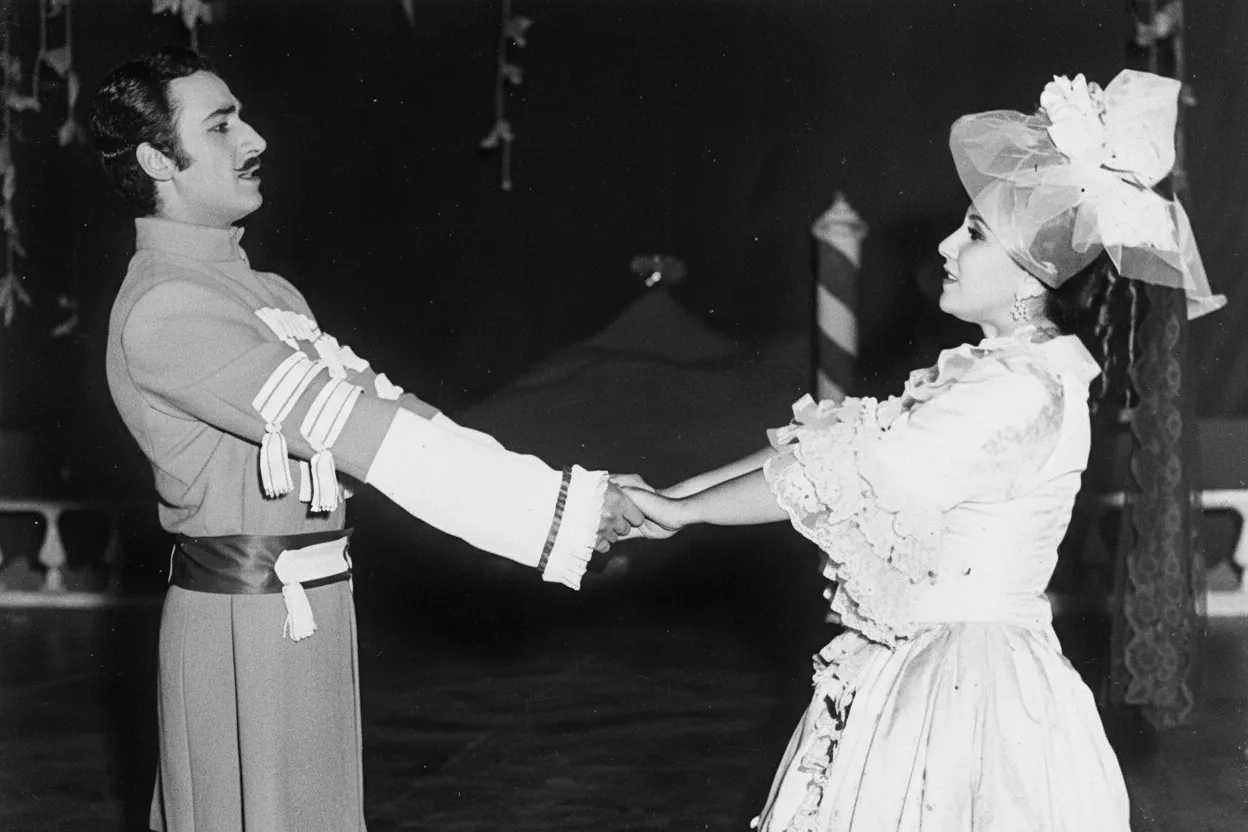
Evelyn Baghcheban and Hossein Sarshar, performing "Così fan tutte " at Ministry of Culture and Arts Theater, Tehran, April 1967
Post-Revolution Status and Resilience
The 1979 Iranian Revolution brought an effective halt to opera and imposed significant restrictions on non-religious music and Western cultural forms. Institutional support for large-scale opera productions was largely eliminated, and the archives of the former National Opera are reported to have been burned or lost.
A major restriction was the outlawing of solo female singing in public before mixed audiences. This effectively marginalized the voices of female opera singers, leading one singer to lament that "we lost half our culture." Grand opera, particularly with female singers in leading roles, has faced severe restrictions since the Revolution.
Nevertheless, the art form has sought new expression through various strategies:
- Puppet Opera: The non-controversial nature of puppet opera proved successful. Loris Tjeknavorian's opera Rostam and Sohrab was finally staged in Tehran in 2005, not as a grand opera, but as a puppet opera. Similarly, the Persian-language opera Molavi by Behzad Abdi was staged as a puppet show in 2010.
- Limited Performances: Since 2000, music restrictions have slightly eased. Small-scale Western operas began to return to Vahdat Hall in the 2010s, such as Puccini's Gianni Schicchi in 2013. In 2019, the opera Carmen was performed for the first time since the Revolution by a cast composed only of female singers for an all-female audience, to comply with the ban on mixed-gender singing.
- The Internet and Exile: While female soloists remain officially barred from public performance before mixed audiences, the internet has allowed Iranian female singers abroad to share their performances.
- Vahdat Hall remains the most important venue in Tehran and continues to host symphonic and orchestral classical music, albeit with limited or adapted opera performances.
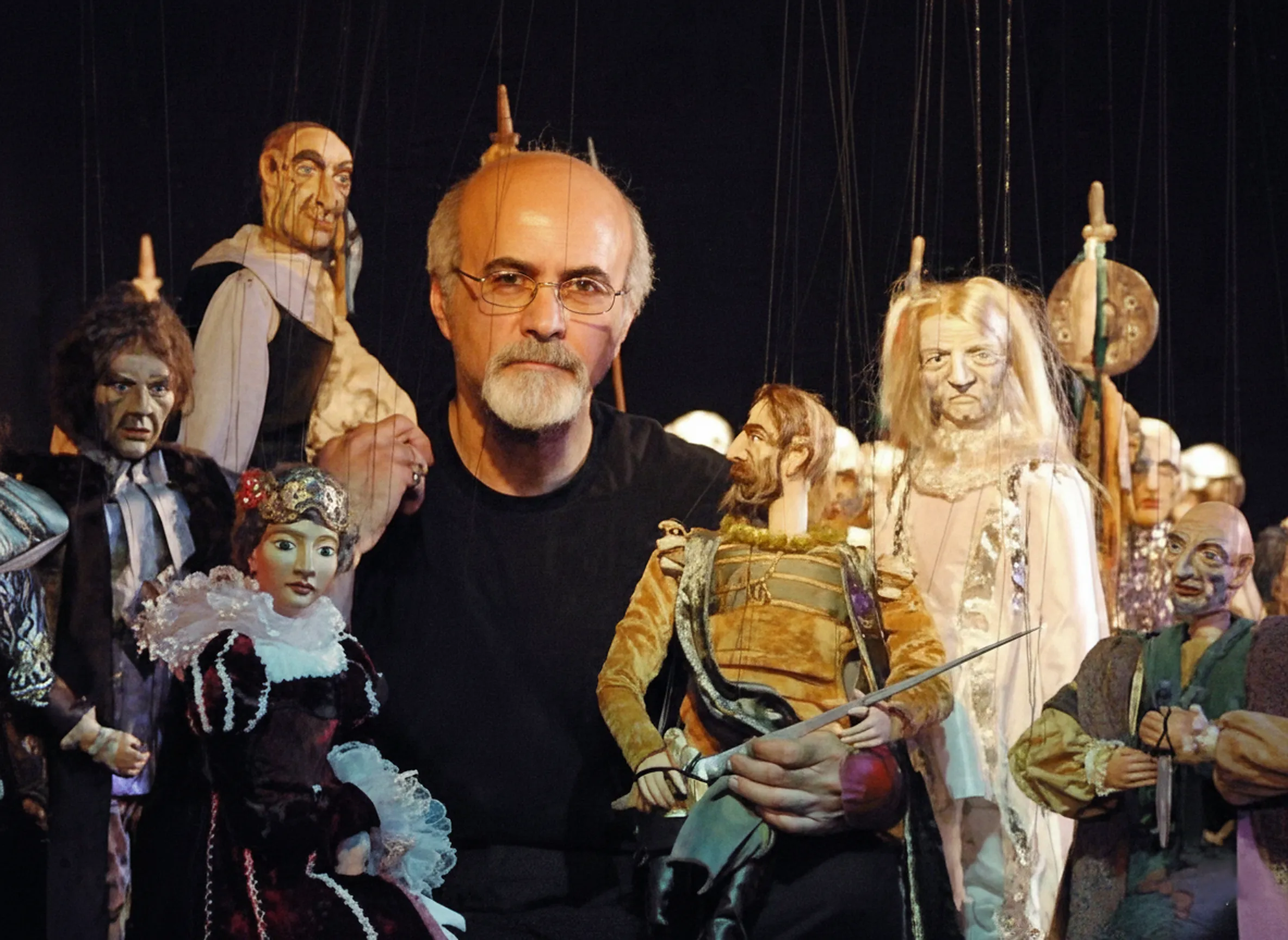
Behrouz Gharibpour, designer and director of the puppet opera Rostam and Sohrab
Sources
- Narratology of Early Operas in Iran and Turkey: A Case Study of Eshghi's ‘The Resurrection of the Iranian Princes’
- The Ritual Dramatic Art of Ta'zieh – UNESCO Intangible Cultural Heritage
- Performing a Cultural Agenda: Women, Opera, and the Politics of Nation-Building in Twentieth-Century Iran
- Roudaki Hall – Wikipedia
- Rostam and Sohrab (Opera) – Wikipedia
- Timeline – Loris Tjeknavorian Official Website
- Untitled Document - Roozaneh Magazine, Monir Vakili Biography
- Untitled Document - History of Roudaki Hall
- Evelyn Baghcheban – Wikipedia
- Mana and Mani – Wikipedia
- Fakhereh Saba - Iranian Awards
- Pariyan, Ghareh-Chedaghi | Opera Magazine
- Show Highlights Iranian Women: Classical music... - Los Angeles Times
- Ahmad Pejman – Wikipedia